
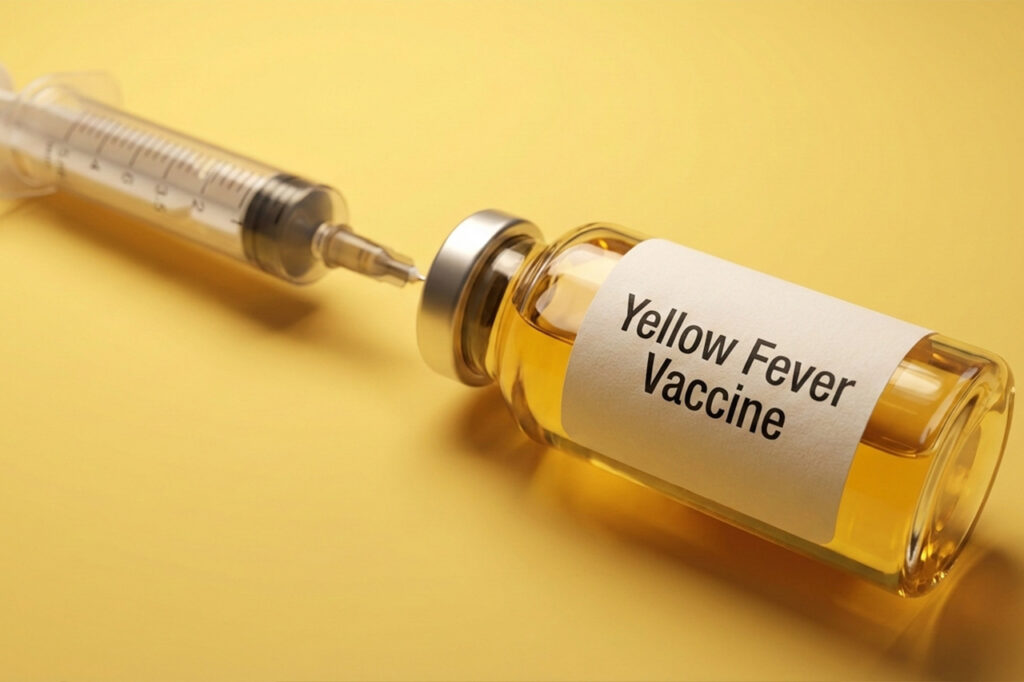
According to the World Health Organisation, yellow fever affects tens of thousands of people every year, with the vast majority of cases occurring in sub-Saharan Africa and tropical South America. It is a serious viral disease spread through infected mosquito bites, and there is no specific cure once contracted.
In many countries, proof of vaccination is a legal entry requirement, and without a valid certificate, you risk being refused entry or quarantined on arrival. This yellow fever vaccine guide covers everything Australian travellers need to know before they travel.
What is the yellow fever vaccine?
Yellow fever is a serious viral disease spread through mosquito bites. In severe cases, it can cause organ failure and death. The yellow fever vaccine contains a weakened form of the virus that trains your immune system to fight the real thing. For most people, a single yellow fever shot provides lifelong protection.
How the vaccine works
The vaccine is given as a single injection and is only available through approved yellow fever vaccination centres in Australia. Once vaccinated, you receive an International Certificate of Vaccination or Prophylaxis (ICVP), your official proof of vaccination for entry into certain countries. Immunity develops within 10 days of your shot.
Who should get the yellow fever vaccination

The yellow fever vaccination is recommended for most travellers who are planning to travel to yellow fever risk countries, particularly in Africa and South America.
You should consider getting vaccinated if you are travelling to or through countries with risk of yellow fever transmission, or if your destination requires proof of vaccination as a condition of entry.
Countries that require the yellow fever vaccine
Some countries require proof of vaccination if you’re arriving from a country with risk of yellow fever transmission. Mandatory requirements apply to parts of:
- Africa – including Angola, Cameroon, Congo, Ghana, and Mali
- South America – including Brazil, Peru, Bolivia, and Ecuador
Without a valid vaccination certificate, entry may be refused. We always advise patients to check the latest requirements through the Australian Department of Health before departure.
When to get the vaccine
Since immunity takes at least 10 days to develop, timing matters. Book your yellow fever vaccine appointment at least 4 to 6 weeks before departure to allow full protection to take effect. Your certificate only becomes valid 10 days after vaccination, so the earlier you plan, the better.
At Southgate Medical, we offer yellow fever vaccination through our clinic.
- Location: 1 / 405 Bay Street, Port Melbourne VIC 3207
- Phone: (03) 9690 1433
Our travel health team will assess your itinerary, review your yellow fever vaccine requirements, and ensure you’re protected before you travel.
How much does the yellow fever vaccine cost?
The yellow fever vaccine cost in Australia typically ranges from $100 to $150, covering the vaccine and consultation fee. We recommend confirming pricing directly with our clinic before your appointment, as costs may vary depending on your individual circumstances.
How long does the yellow fever vaccine last?
For the majority of travellers, a single yellow fever shot provides lifelong protection. In 2016, the World Health Organisation formally recognised this by removing the requirement for a booster every 10 years from the International Health Regulations. This means one yellow fever vaccine appointment is all most people will ever need.
Booster shots and proof of vaccination
A booster may still be recommended for some people, including:
- Those vaccinated before the age of 2
- Women who were pregnant at the time of first vaccination
- People who are HIV-positive or immunocompromised
- Those who received a stem cell transplant after vaccination
If any of these apply to you, our travel health team can advise whether a booster is appropriate before your next trip.
Yellow fever vaccine side effects and safety

Most yellow fever vaccine side effects are mild and resolve within a few days. Knowing what to expect helps you prepare and recognise when to seek medical advice.
Common side effects of the yellow fever vaccine
Common yellow fever vaccine side effects after your shot include soreness or redness at the injection site, low-grade fever, headache, muscle aches, and mild nausea or fatigue. These are a normal immune response and generally settle on their own within a few days without treatment.
Rare reactions and when to see a doctor
Serious yellow fever vaccine reactions are rare. Two uncommon conditions include vaccine-associated neurotropic disease, affecting the nervous system, and vaccine-associated viscerotropic disease, affecting organs like the liver and kidney.
Seek immediate medical advice if you experience high fever, jaundice, unusual bleeding, persistent vomiting, or confusion after vaccination. These reactions are more likely in people over 60 or those who are immunocompromised. If you have any concerns after receiving your vaccine at our clinic, don’t hesitate to contact us.
Who should not get the vaccine
The yellow fever vaccine is not recommended for:
- Infants under 9 months of age
- Pregnant women, unless travel is unavoidable
- People who are immunocompromised
- Those with a thymus disorder or severe egg allergy
A medical exemption certificate may be available in some cases, though acceptance varies by destination. If you’re unsure whether the vaccine is suitable for you, our team will assess your suitability before proceeding.
After your shot: what to expect
Once you’ve received your yellow fever shot, keep these two things in mind before you travel.
Your travel date
Immunity takes at least 10 days to develop after your yellow fever vaccination. Your certificate only becomes valid 10 days after your shot. We recommend planning your yellow fever vaccine appointment at least 4 to 6 weeks before departure to ensure you’re fully protected and entry-ready.
Your international certificate of vaccination
After your vaccination, our team will issue your International Certificate of Vaccination or Prophylaxis (ICVP), your official proof of vaccination for entry into yellow fever risk countries. It becomes valid 10 days after vaccination, is recognised for life under the International Health Regulations, and must be signed and stamped by our approved centre. Keep the original safe and carry it whenever travelling to countries that require proof of vaccination.
Frequently asked questions
We generally advise against the yellow fever vaccine during pregnancy unless travel to a high-risk area is absolutely unavoidable. If you are pregnant and travel cannot be postponed, our team can issue a medical exemption certificate. In the event of an active yellow fever outbreak, vaccination may be considered on a case-by-case basis following a thorough risk assessment.
The yellow fever vaccine cost in Australia typically ranges from $95 to $190 for the vaccine itself, with consultation fees of $85 to $155. Some consultation costs may be claimable through Medicare if travel is not work-related. We recommend confirming costs directly with our clinic before booking your yellow fever vaccine appointment, as prices vary between approved vaccination centres.
Yellow fever vaccination is only available through government-approved yellow fever vaccination centres in Australia. These designated centres are authorized to administer the vaccine and issue the International Certificate of Vaccination or Prophylaxis (ICVP). Lists of approved centres are maintained by state health departments and the Australian Department of Health.
Australia does not refuse entry if you lack yellow fever vaccination, but it is strongly recommended for travelers arriving from yellow fever risk countries. If arriving without a vaccination certificate from a risk country, biosecurity officers will provide a Yellow Fever Action Card and information about the disease. The vaccine protects travelers, not border entry requirements.
People aged 60 and over can receive the yellow fever vaccine, but the risk of serious adverse events is higher in this age group, particularly in those aged 65 and older. We conduct a careful risk-benefit assessment with every patient before administering the vaccine. If you are in this age group, we encourage you to speak with our travel health team well before your trip.
Medical exemptions are available for people with thymus disorders, severe immunocompromisation, severe egg allergy, infants under 9 months, or pregnant women. The exemption must be issued on official letterhead from an approved yellow fever vaccination centre, include your passport details, and bear the clinic’s special authorization stamp. However, not all countries accept exemption certificates.
Most side effects like soreness, mild fever, headache, and muscle aches resolve within a few days without treatment. Seek immediate medical attention if you experience high fever, jaundice, persistent vomiting, unusual bleeding, or confusion after vaccination. Serious reactions including neurotropic disease or viscerotropic disease are extremely rare but more common in people over 60 or immunocompromised individuals.
Most travelers do not need a booster shot, as a single yellow fever vaccination provides lifelong protection. The World Health Organization removed the 10-year booster requirement in 2016, and countries cannot require revaccination as an entry condition. Boosters may be recommended for those vaccinated before age 2, pregnant women at first vaccination, HIV-positive individuals, or stem cell transplant recipients.